



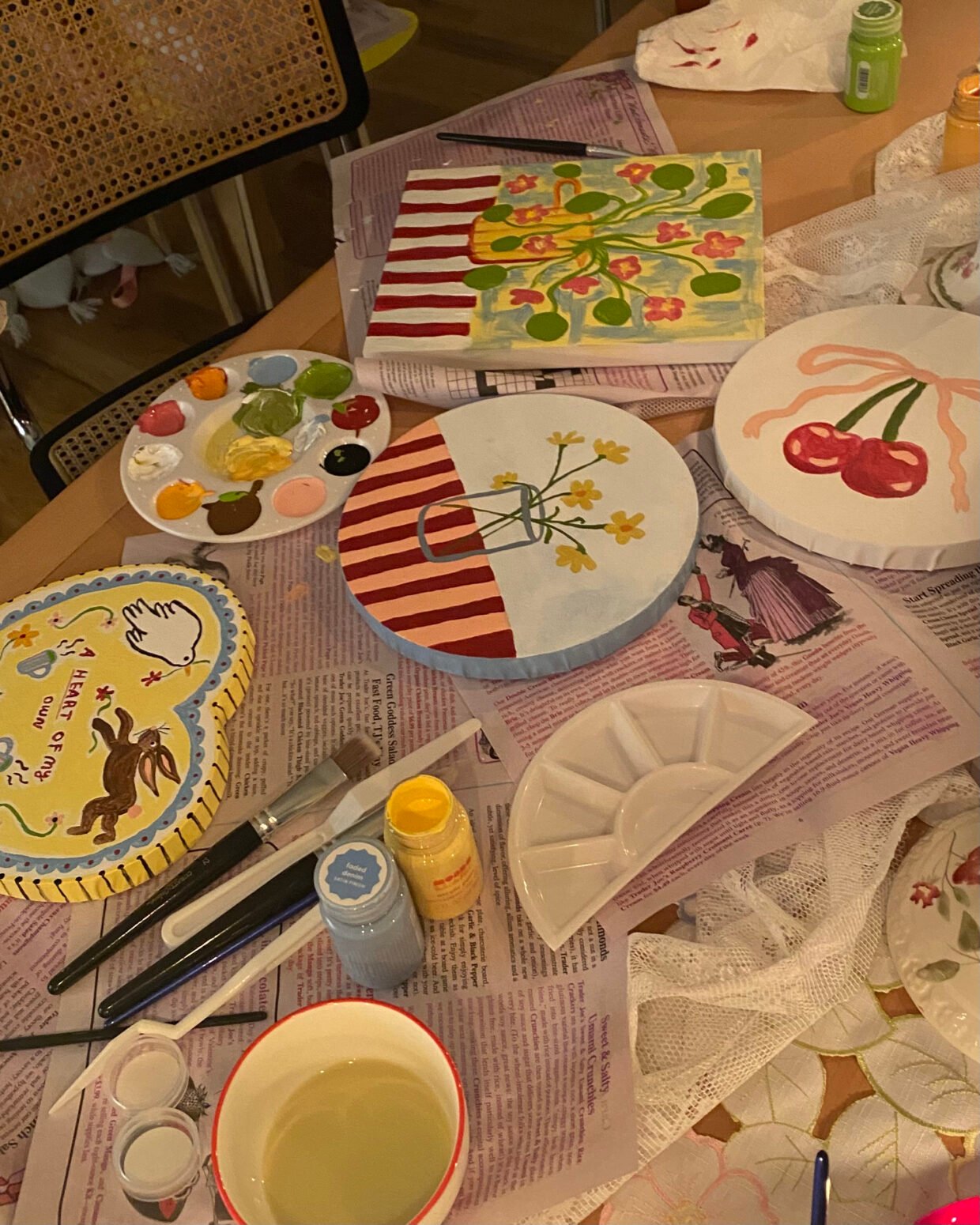
A permission slip for every creative who feels guilty about the hours spent reading, watching, and listening instead of making
There’s a specific kind of guilt that creatives know well. You’ve spent an evening reading a novel instead of working on your own. You watched three episodes of a beautifully shot show when you could have been painting. You went down a two-hour rabbit hole of other people’s music instead of opening your own project files.
And somewhere in the back of your mind, a voice whispers: you should be making something.
Here’s what that voice gets wrong…
The myth of the purely productive creative
We live in a culture that has turned output into a moral virtue. More content, more products, more posts, more projects. For creatives especially, particularly those of us building businesses or audiences around our work, there’s enormous pressure to be constantly producing. Rest feels lazy. Consuming feels indulgent. Making is the only thing that counts.
But this framework fundamentally misunderstands how creativity actually works.
Creativity is not a tap you turn on. It’s a well! And a well that never gets refilled will eventually run dry. The art you consume, the books, films, music, paintings, poetry, theatre, photography, games, etc… that’s the water going in. Your output is what comes out. You cannot separate them and expect the system to keep functioning.
When creatives talk about burnout, about losing their voice, about feeling like they have nothing left to say, it’s often not because they’ve been resting too much. It’s because they’ve been outputting without ever inputting.
What consuming art actually does to your creative brain
Consuming art isn’t passive. Even when it feels like pure enjoyment — even when you’re curled up with a book just because you love it — something active is happening in your creative mind.
You’re learning craft without realizing it. Every story you read teaches you something about pacing, voice, and structure. Every film you watch gives you a lesson in visual storytelling, in how silence works, in how to build tension. Every album you absorb teaches you about dynamics and texture and what it feels like when an artist takes a risk that pays off. You don’t have to be studying it analytically for this to work. It happens through osmosis.
You’re expanding your frame of reference. The more art you’ve encountered, the more raw material your imagination has to work with. Unexpected connections get made between things you’ve read and things you’ve experienced and things you’ve noticed. That’s where original ideas come from, not from staring at a blank page, but from a mind so full of varied input that it starts making connections nobody else has made yet.
You’re remembering why you make things in the first place. This one is quiet but important. When you encounter a piece of art that genuinely moves you, one that makes you catch your breath, or cry, or laugh, or think about something in a way you never have before, it reconnects you to what art is for. It reminds you that what you’re trying to do matters. That it reaches people! That it’s worth the difficulty!
You’re finding your own taste. You can only develop a strong creative voice by knowing what resonates with you and what doesn’t. Consuming widely and intentionally teaches you what you love, what you’re indifferent to, and, crucially, what you want to do differently. Your taste is the compass that guides your creative decisions. You sharpen it by using it.
The artists who swear by it
This isn’t a new idea. Austin Kleon, author of Steal Like an Artist, built an entire philosophy around the idea that creative work is fundamentally about curating influences and letting them collide in new ways. He keeps notebooks, collects clippings, reads voraciously, and treats all of it as part of his creative practice, not a break from it.
Stephen King famously reads around seventy books a year and writes about it extensively in On Writing, not as a guilty pleasure but as a professional obligation. He’s clear that writers who don’t read widely cannot write well. The input and the output are inseparable.
Musicians talk about their listening libraries the way painters talk about studying the masters. Filmmakers rewatch films they love not for entertainment but to understand how they work. Dancers watch other dancers. Photographers study photographs. This is not procrastination. This is apprenticeship!
The difference between consuming with intention and numbing out
There’s an important distinction worth making here. Consuming art as a creative practice is different from doomscrolling, bingeing content out of avoidance, or filling every quiet moment with noise to avoid your own thoughts.
Intentional consumption has a quality of presence to it. You’re actually there, noticing what you love about a sentence, sitting with an image, letting a piece of music do something to you. You might take notes afterward, or just let it settle. You might feel inspired or unsettled or challenged. Something moves.
Numbing out, by contrast, leaves you feeling emptier than when you started. The content washes over you without really landing. You’ve spent two hours watching things you won’t remember.
The goal isn’t to make consuming art feel like homework; that kills the joy, and the joy is actually part of what makes it nourishing. But bringing even a light amount of awareness to what you’re taking in makes it a genuinely restorative and enriching practice rather than just time that slipped away.
Making space for it in your creative life
If you’ve internalized the “always be making” mentality, giving yourself permission to consume art intentionally can feel surprisingly difficult at first. Here are a few ways to make it feel like a real part of your practice rather than something you squeeze in guiltily:
Treat it like an appointment. Block time in your week for reading, watching, visiting a gallery, going to a concert. Put it in your calendar with the same respect you’d give a client meeting or a creative deadline. It’s not optional. It’s maintenance.
Keep an inspiration log. When something moves you, write it down. What was it about? What did it make you feel? What did it make you want to create? An inspiration log over time becomes one of the most valuable creative resources you have, a record of your evolving taste and the threads that keep drawing you back.
Let yourself be a fan. Somewhere along the way, a lot of creatives lose the ability to just love something without immediately analyzing it, or worse, comparing themselves to it. Practice consuming art the way you did before you were “a creative”: with uncomplicated delight. Bring the kid energy back. Let yourself be amazed.
Follow your curiosity, not your algorithm. The art that ends up meaning the most to you often isn’t the most-recommended or the most-viewed. It’s the strange thing you found by accident, the recommendation from a friend, the obscure album someone mentioned in passing. Let yourself wander.
You are a vessel, not just a factory
The creative women I most admire, the ones with strong voices, original visions, and sustainable practices, are almost always voracious consumers of art. They read. They watch. They listen. They visit galleries and go to shows and have strong opinions about films nobody else has seen. They reference things. They’re curious.
Their art is rich because they are rich. They give out so generously because they take in so generously.
Making things is important. It’s probably why you’re here, and it’s worth protecting. But so is the wide, wandering, nourishing practice of letting other people’s creativity wash over you and fill you back up.
You’re allowed to read the whole book. You’re allowed to watch the whole film. You’re allowed to spend an afternoon in a gallery with nowhere else to be.
That’s not wasted time. That’s just how the well gets refilled! 🌸
If you’re looking for a way to capture your inspiration, track your creative inputs, and keep all your ideas in one organized place, the notique shop has Notion templates built specifically for creative women. Come have a look →


[…] Why Consuming Art Is Just As Important As Making It […]
[…] Why Consuming Art Is Just As Important As Making It […]
[…] Why Consuming Art Is Just As Important As Making It […]